

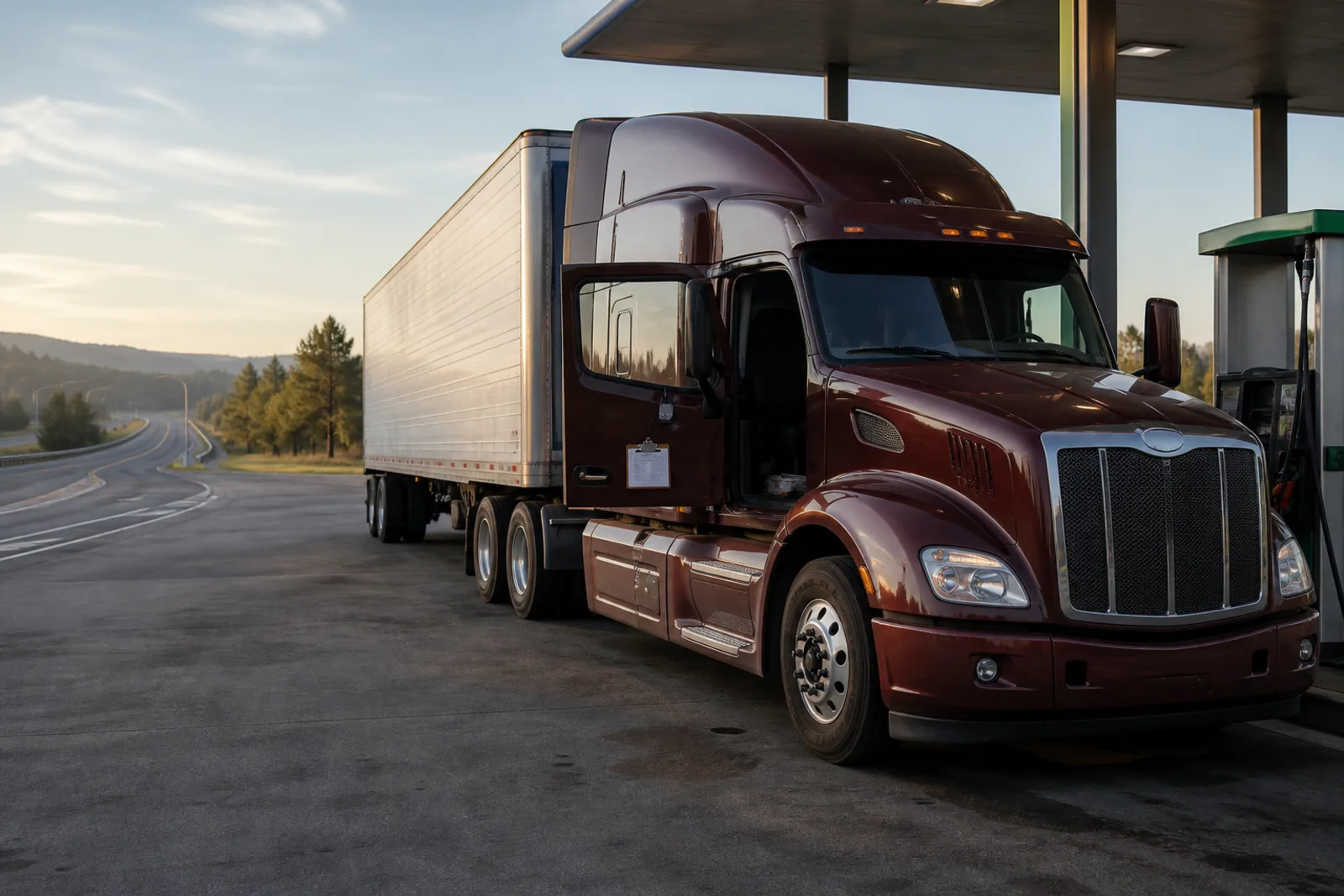
IFTA filing services help licensees in Texas reconcile jurisdiction mileage and fuel purchases for their base-jurisdiction fuel-tax return. Confirm the qualified vehicles, account details and source records before preparing the quarter’s figures.
IFTA Filing Services in Texas
Compare IFTA return preparation for licensees in Texas: jurisdiction mileage, fuel reconciliation, filing access and confirmation, with tax and service fees separated.
Get your IFTA return filed
Free and no obligation. Three quick steps, every question is optional.
Your details are used only to arrange the support you request.
Request received
Thanks. We have your IFTA Filing Services in Texas request.
If you gave an email address, watch your inbox for a confirmation.
IFTA Filing Services providers serving Texas
Quarterly IFTA returns, mileage and fuel records
Carriers operating only in one jurisdiction may have different state fuel-tax obligations. Temporary fuel permits may be an option for occasional travel, but permit cost and limitations should be compared with licensing based on the actual operation.
The reliability of an IFTA return depends on the trip and fuel records behind it. Use a complete vehicle roster and the opening and closing odometer or distance readings for the reporting period. Bring in ELD or GPS distance, dispatch trip records, fuel-card transactions, bulk-fuel withdrawals and manually documented fuel purchases. Then reconcile exceptions such as missing jurisdiction crossings, rejected fuel-card transactions, replacement vehicles and trips completed under a temporary permit.
IFTA base-jurisdiction and filing checks for carriers in Texas
Texas-based IFTA licensees use the Comptroller’s reporting rules. Agree who checks Webfile access and reconciles the supplement’s jurisdiction distances. Texas guidance addresses how fuel-trip-permit miles should be reported in total, jurisdiction and taxable mileage. Confirm the current Comptroller instructions before filing.
Have vehicle details ready, trip or ELD distance records, fuel receipts, bulk-fuel records where relevant and prior returns for secure review. Confirm the base jurisdiction and qualified vehicles. Fuel-tax reporting is separate from FMCSA authority, IRP registration and Form 2290.
For more detail, read our ifta filing services guide and DOT compliance services in Texas. Check the International Fuel Tax Association resources for the underlying requirements. See Texas IFTA guidance.
DOT compliance services by city in Texas
- DOT Clearinghouse Compliance Help in Austin
- DOT Clearinghouse Compliance Help in El Paso
- DOT Clearinghouse Compliance Help in Fort Worth
- DOT Clearinghouse Compliance Help in Odessa
- DOT Compliance Companies in Dallas, TX
- DOT Compliance Companies in Houston, TX
- DOT Compliance Companies in Laredo, TX
- DOT Compliance Companies in San Antonio, TX
- Mock DOT Audit Help in Austin
- Mock DOT Audit Help in El Paso
- Mock DOT Audit Help in Fort Worth
- Mock DOT Audit Help in Odessa
Related state DOT compliance guides
DOT compliance questions for Texas
Who generally needs IFTA?
IFTA generally concerns qualifying motor vehicles operating in two or more member jurisdictions. Check the vehicle configuration, weight and base-jurisdiction rules before assuming a license is required.
Do I need an IFTA return if the truck did not run?
Licensees generally still have a reporting obligation for the quarter. Check the current base-jurisdiction instructions for a no-activity return and any account-closing requirements.
Is IFTA the same as IRP or Form 2290?
No. IFTA concerns fuel-tax reporting, IRP concerns apportioned registration, and Form 2290 is a federal heavy-vehicle-use tax return.
What mileage records does an IFTA filing service need?
The provider should be able to reconcile distance by jurisdiction with trip or electronic source records. Supply fuel purchases and any adjustments, rather than only a single total-mileage figure.
Are the listed providers based in Texas?
The results are filtered by declared service coverage for Texas. A provider may work remotely or cover several areas. Confirm whether they can serve Texas and whether an in-person appointment is needed.
DOT compliance guides
DOT Drug Test Retest: Split Specimens and Employer Duties
A fresh negative test does not overturn a verified DOT positive. The split-specimen procedure checks the original specimen,…
Read guideShy Bladder DOT Drug Test: What the DER Must Check
An insufficient urine sample needs the DOT collection and medical-review procedure, not an automatic failed-test label. Here are…
Read guideWho Is Exempt from UCR Registration? Eligibility Guide
Check common UCR eligibility questions about intrastate work, owner-operators, private carriers, brokers and smaller vehicles.
Open resource