
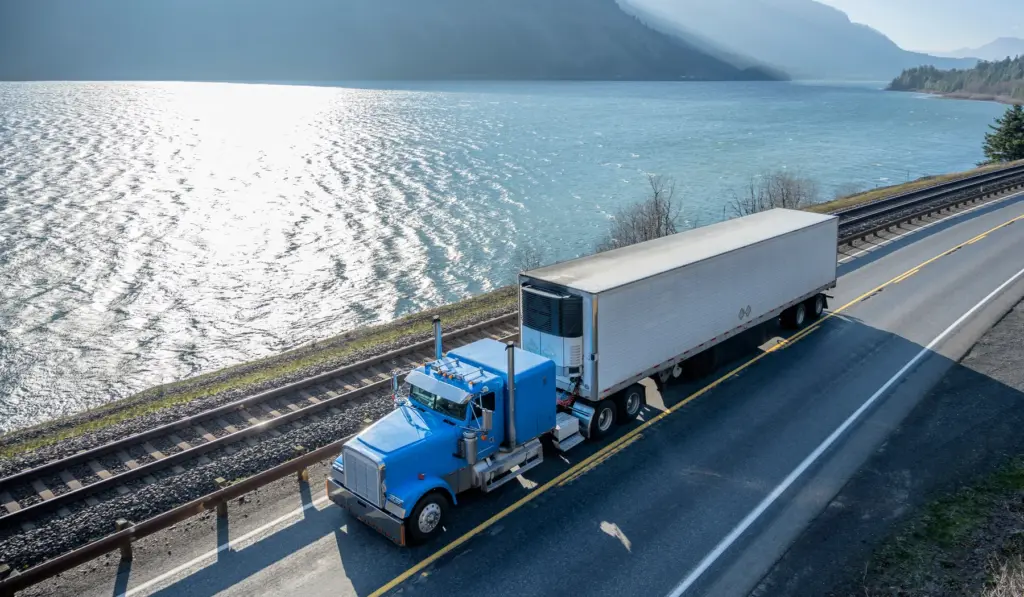
Commercial truck insurance services connect a carrier’s actual authority, equipment, cargo, drivers and routes with an appropriately licensed insurance professional. A certificate with the words “commercial auto” is not enough. The policy, limits, endorsements, scheduled units and federal filing must support the operation the carrier intends to run.
Common federal financial-responsibility baselines
Requirements vary by entity, vehicle, cargo and authority. The current FMCSA chart should be checked for the exact operation. Common examples include:
| Operation | Common federal public-liability baseline | Important note |
|---|---|---|
| For-hire nonhazardous property carrier, vehicle at least 10,001 pounds GVWR | $750,000 | Customer contracts and practical exposure often call for more |
| For-hire nonhazardous property carrier, vehicle below 10,001 pounds GVWR | $300,000 | Confirm authority and operation; state rules may differ |
| Specified hazardous materials | $1,000,000 or $5,000,000 depending on material and operation | Classification and quantity must be reviewed carefully |
| For-hire passenger carrier, 15 or fewer passengers | $1,500,000 | Passenger count includes the driver for the federal table |
| For-hire passenger carrier, 16 or more passengers | $5,000,000 | Vehicle and service details still matter |
These are narrow examples, not universal rules, a quote or a coverage recommendation. Exemptions and operation-specific qualifications can change what applies. An appropriately licensed insurance professional should review current federal and state rules, contracts and exposures for the individual carrier.
Coverage areas a trucking specialist should discuss
Primary auto liability
Third-party bodily injury and property damage arising from covered vehicles, aligned with authority and required filings.
Physical damage
Collision and other covered loss to owned or financed equipment, with values, deductibles and settlement terms reviewed.
Motor truck cargo
Carrier liability for covered cargo loss, subject to commodities, exclusions, limits, deductibles and security conditions.
General liability
Specified non-auto business liabilities, which should not be assumed to replace auto or cargo coverage.
Non-trucking or bobtail exposures
Coverage structured around leased owner-operator use, with dispatch and business-use wording examined carefully.
Workers’ compensation or occupational accident
Different products with state-law and worker-classification consequences requiring specialist review.
FMCSA insurance filings are not the policy itself
The insurer or its authorized financial-responsibility filer submits forms such as BMC-91 or BMC-91X electronically to show applicable coverage. A compliance service cannot independently create an accepted filing without that insurer-controlled process. FMCSA will not grant operating authority until required financial responsibility is on file, and later cancellation can lead to revocation proceedings. The carrier remains responsible for monitoring authority and filing status.
The MCS-90 endorsement supports federal public-liability responsibility in defined circumstances. It is not cargo insurance, does not automatically expand every policy term for the insured, and should not be treated as a substitute for understanding the policy. Ask the broker or insurer to explain how the endorsement relates to the operation.
Information needed for a reliable submission
- Legal entity, USDOT and MC numbers, authority type and operating history
- Vehicle schedule with VINs, values, weights, ownership and garaging
- Driver roster with experience, license data and relevant history
- Commodities, maximum values, loading responsibility and excluded cargo concerns
- Operating radius, states, lanes, terminals and customer locations
- Annual mileage, revenue, unit use and seasonal changes
- Loss runs and a factual explanation of significant claims or corrective action
- Contracts, shipper or broker limits, additional-insured and certificate needs
- Safety controls, telematics, maintenance and driver-monitoring practices
How to compare commercial truck insurance providers
- Confirm licensing and trucking experience. The producer should understand motor-carrier filings and the states involved.
- Compare coverage, not only premium. Review limits, deductibles, forms, endorsements, exclusions, reporting duties and insurer.
- Match scheduled operations. Check vehicles, drivers, commodities, radius, named insureds and ownership arrangements.
- Verify federal and state filings. Identify who submits them, when, and how the carrier confirms acceptance.
- Review claims support. Know the reporting channel, after-hours process and documentation expected after a loss.
- Plan for changes. Establish how new drivers, units, commodities or lanes are approved before exposure begins.
Red flags in a fast insurance quote
Be cautious when an application omits difficult commodities, uses the wrong operating radius, leaves regular drivers undisclosed, schedules equipment under the wrong entity or promises a federal filing before underwriting is complete. Inaccurate information can produce a cheap quote that does not match the risk and can create coverage disputes.
For a broader loss-prevention review, compare fleet risk management services. New or changing carriers can review USDOT and MC authority setup.
How DCC helps with this service
DOT Compliance Companies is a provider-matching marketplace. We help carriers and drivers compare listed providers and send a request to suitable businesses. The selected provider confirms its own scope, credentials, coverage and deliverables. Regulated decisions and the motor carrier's legal duties remain with the responsible parties described on this page.
Find coverage for your trucking operation
Share your authority, vehicles, drivers, cargo, routes, loss history and required effective date.
Request trucking insurance support