
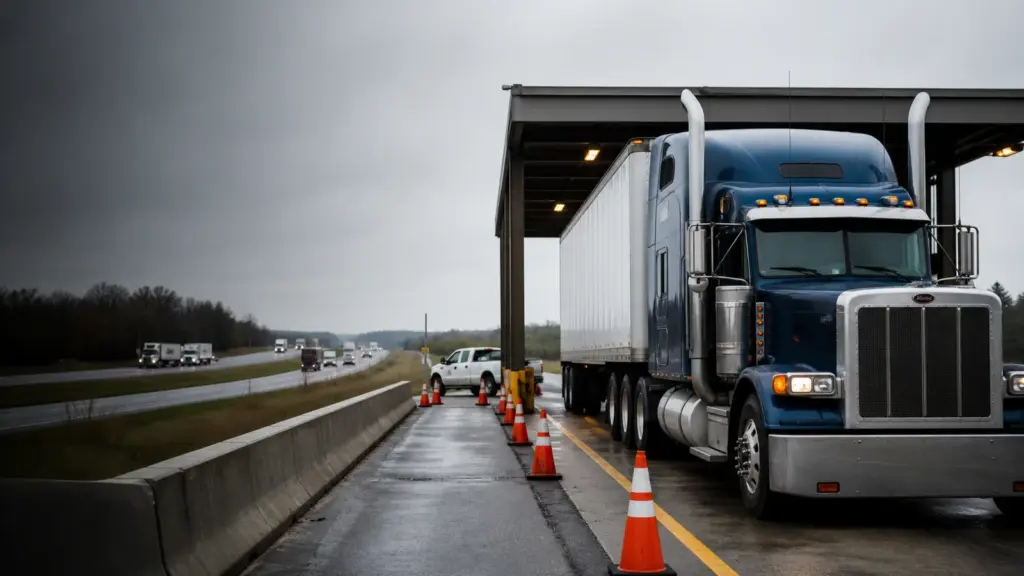
A CDL traffic attorney helps a commercial driver or motor carrier assess a citation, license action or enforcement matter where an ordinary traffic outcome can affect driving eligibility, employment, insurance and a carrier’s safety record. The right lawyer is licensed in the relevant jurisdiction, understands commercial-driver consequences and gives a realistic explanation of options, deadlines and fees after reviewing the actual documents.
Matters a CDL traffic lawyer may handle
| Matter | Potential commercial impact | Who controls the decision |
|---|---|---|
| Speeding or moving violation | Points, serious-traffic-violation consequences, employer and insurance review | State court or agency, with federal CDL rules applied to convictions |
| Inspection finding that places a driver or vehicle out of service | Immediate operating restriction, possible citation and SMS data | The issued order controls movement; a related citation or data challenge follows its own process |
| Conviction for violating an out-of-service order | Specific CDL disqualification and penalty exposure | State court or agency, with federal CDL consequences applied to the conviction |
| License suspension, downgrade or disqualification | Loss of legal ability to perform CDL work | State licensing agency and applicable federal or state law |
| Crash-related citation | Criminal, civil, licensing, employment and insurance consequences | Multiple forums may be involved |
| FMCSA or state carrier-enforcement action | Carrier penalties, operating restrictions or safety-rating consequences | Specialist motor-carrier enforcement counsel may be needed beyond a traffic-ticket practice |
| Incorrect safety data | Carrier or driver record impact even after the court matter | DataQs review and the reporting agency, supported by documents |
Why CDL cases need commercial-driver analysis
A result that looks minor on a standard license can have different consequences for a CDL holder. Federal rules define categories such as serious traffic violations and establish disqualification consequences in specified circumstances. State law controls the charge, court procedure, points and many license actions. Federal anti-masking rules also restrict a state from concealing, deferring judgment on or otherwise masking a CDL holder’s qualifying traffic-control conviction. A lawyer can evaluate lawful defenses and outcomes but should never promise to make an otherwise reportable conviction disappear.
Drivers should tell counsel whether the event occurred in a commercial or personal vehicle, what class and endorsements they hold, their licensing state, prior convictions and current employer status. Withholding history can produce incorrect advice.
What to do after receiving a citation
- Read every document. Identify court, jurisdiction, charge, response method, hearing date and deadline.
- Preserve evidence. Keep the citation, inspection report, photographs, video, ELD data, dispatch records and witness details.
- Do not alter records. Place relevant electronic data on hold under company policy and legal guidance.
- Check immediate driving status. An out-of-service order, suspension or medical issue may prohibit continued operation.
- Consult qualified counsel. Share complete documents and history early enough for the lawyer to evaluate options.
- Coordinate related processes. A court case, state license record, DataQs request, employer review and insurance claim may have different deadlines.
How to choose a CDL traffic attorney
DOT Compliance Companies provides a matching and intake route, not legal representation. The retained lawyer controls legal advice, strategy, plea discussions, appearances and the attorney-client relationship. For an FMCSA civil penalty, safety-rating dispute or broader carrier-enforcement matter, ask specifically about federal motor-carrier administrative experience rather than assuming a traffic-citation practice covers it.
- Are you currently licensed and in good standing in the state where this matter will be heard?
- Do you regularly handle commercial-driver cases in this specific court or agency?
- Will you analyze federal CDL and employer consequences as well as the state charge?
- Who will appear, communicate with the client and perform the work?
- What deadlines and documents do you need immediately?
- Is the fee flat, hourly or staged, and what expenses are separate?
- What outcomes are legally possible, and what facts make each more or less likely?
- Will you advise on related licensing, DataQs, employment or carrier-enforcement steps, or refer those separately?
- How will the client receive the final order and proof of disposition?
Red flags when seeking legal help
Avoid anyone who guarantees dismissal, claims special access to a judge or agency, is not transparent about attorney licensing, or asks for payment without reviewing the citation and deadline. A directory listing is not an endorsement or proof of suitability. The client should independently verify the lawyer with the relevant state bar.
Driver case and carrier record are separate
A favorable court result may support correction of inspection or safety data, but it does not automatically change every federal record. A DataQs request needs evidence and is reviewed by the responsible agency. Conversely, DataQs does not replace a timely court response. The lawyer and carrier safety team should coordinate without assuming that one process pauses another.
Employers should preserve confidentiality and avoid directing a driver to a particular plea outcome for the carrier’s convenience. The carrier may need separate counsel when its interests differ from the driver’s, particularly after a serious crash or when company practices are under review.
Prepare for the first consultation
Have the complete citation and inspection report, court notice, driver’s license and state, driving history, employer details, vehicle type, photographs or video, ELD and dispatch information, witness contacts and all known deadlines. Explain whether any plea or payment has already been entered and whether the driver is currently suspended or out of service.
For incorrect roadside or crash data, compare DataQs challenge support. Carriers facing a broader investigation can use DOT compliance consulting and retain independent counsel where needed.
How DCC helps with this service
DOT Compliance Companies is a provider-matching marketplace. We help carriers and drivers compare listed providers and send a request to suitable businesses. The selected provider confirms its own scope, credentials, coverage and deliverables. Regulated decisions and the motor carrier's legal duties remain with the responsible parties described on this page.
Find counsel for a CDL matter
Share the jurisdiction, charge, deadline and whether a court, licensing or FMCSA record is involved.
Request CDL legal support