
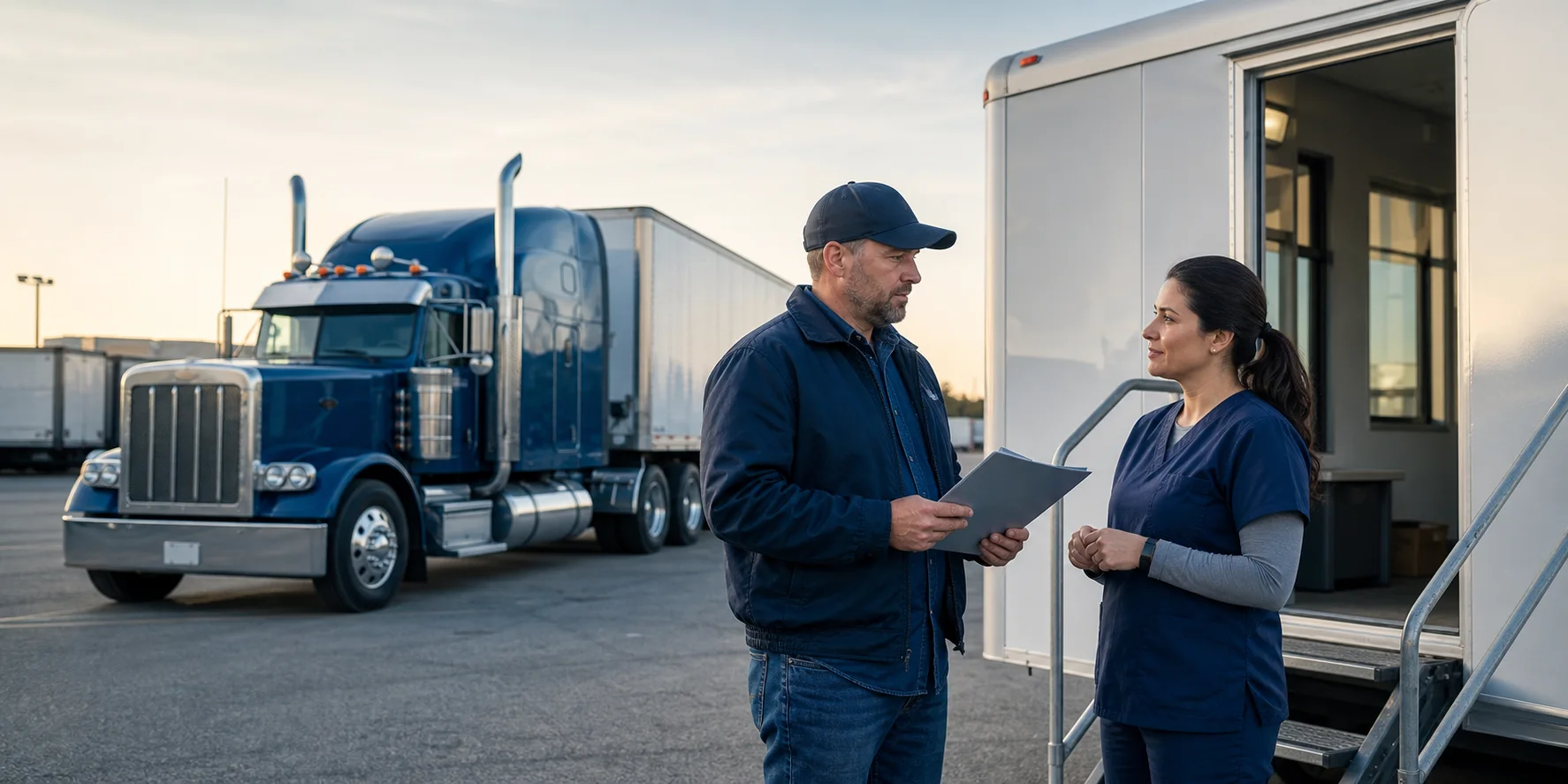
A DOT drug testing consortium helps covered employers and owner-operators in Ohio administer a drug and alcohol testing program. Part 382 coverage concerns safety-sensitive work involving CDL-required commercial motor vehicles, in intrastate or interstate commerce, rather than simply holding a CDL.
DOT Drug Testing Consortium in Ohio
Compare Part 382 drug and alcohol program support, random-pool administration and collection access for Ohio; confirm coverage and charges directly.
Join a DOT drug and alcohol consortium
Free and no obligation. Three quick steps, every question is optional.
Your details are used only to arrange the support you request.
Request received
Thanks. We have your DOT Drug Testing Consortium in Ohio request.
If you gave an email address, watch your inbox for a confirmation.
DOT Drug Testing Consortium providers serving Ohio
Matching provider profiles
in Ohio
Global Knight Verifications
Premium MemberGlobal Knight Verifications LLC is a nationwide provider of comprehensive DOT compliance management, helping motor carriers stay compliant, organized, and prepared for regulatory audits.We specialize in providing both fully managed,…
- DOT physical exams
- Occupational health services
- DOT drug and alcohol testing program management
- Pre-employment drug testing
Covers: Alabama · Alaska · Arizona
Kelmar Safety Inc.
Premium MemberKELMAR Safety Inc. is a privately held Department of Transportation (DOT) rules and regulations company dedicated to helping fleets of all sizes become and remain in compliance. KELMAR was founded…
- DOT physical exams
- CDL medical cards
- Certified medical examiners
- DOT drug and alcohol testing program management
Covers: Alabama · Alaska · Arizona
Random drug testing pools and C/TPA support
For a multi-driver fleet, the C/TPA cannot act as the designated employer representative. It also cannot decide for the employer whether reasonable-suspicion or post-accident testing is required, determine that a refusal occurred, or make the employer’s return-to-duty and follow-up determinations. Part 40 contains limited provisions for self-employed owner-operators, but a fleet should not buy a service on the assumption that every duty can be handed over.
Roster control is where avoidable problems often start. A departed employee left in the pool can distort selections; a new driver subject to Part 382 who was never added can sit outside the program altogether. Tell the administrator about changes as they happen and compare the active pool list with payroll or driver records regularly.
Checking collection-site coverage in Ohio
For drivers working in Ohio, verify actual collection locations, hours and after-hours instructions in Ohio. Declared statewide coverage does not prove a nearby collection site. Part 382 can cover CDL-required operations in intrastate as well as interstate commerce; crossing a state line is not the sole test.
Have the covered-driver roster ready, employer details, existing testing records and contact details for the person responsible for responding to a selection for secure review. The program must match the drivers and operations covered by Part 382; consortium enrollment does not replace the employer’s responsibilities.
For more detail, read our dot drug testing consortium guide and DOT compliance services in Ohio. Check the FMCSA drug and alcohol testing rules for the underlying requirements.
DOT compliance services by city in Ohio
Related state DOT compliance guides
DOT compliance questions for Ohio
Does an owner-operator need a DOT testing consortium?
An owner-operator subject to FMCSA Part 382 testing must participate in a random testing pool through a consortium. A self-employed CDL driver has both employer and driver responsibilities.
Does a consortium membership include every drug test?
Not necessarily. Ask whether enrollment, random selections, collections, laboratory and MRO work, alcohol tests and after-hours arrangements are included or charged separately.
Can a non-DOT test replace a required DOT test?
No. A required DOT test must use the applicable DOT procedures. A general workplace test should not be treated as an interchangeable substitute.
Can drivers use collection sites outside their home state?
A program may arrange collections across several states. Confirm the actual sites, hours and instructions before relying on that coverage.
Are the listed providers based in Ohio?
The results are filtered by declared service coverage for Ohio. A provider may work remotely or cover several areas. Confirm whether they can serve Ohio and whether an in-person appointment is needed.
DOT compliance guides
Shy Bladder DOT Drug Test: What the DER Must Check
An insufficient urine sample needs the DOT collection and medical-review procedure, not an automatic failed-test label. Here are…
Read guideDOT Reasonable Suspicion Training Requirements for Supervisors
What FMCSA expects supervisors to learn, document and do when observable facts may justify a DOT test.
Read guideWho Is Exempt from UCR Registration? Eligibility Guide
Check common UCR eligibility questions about intrastate work, owner-operators, private carriers, brokers and smaller vehicles.
Open resource